
A Legacy of Being Leaderful
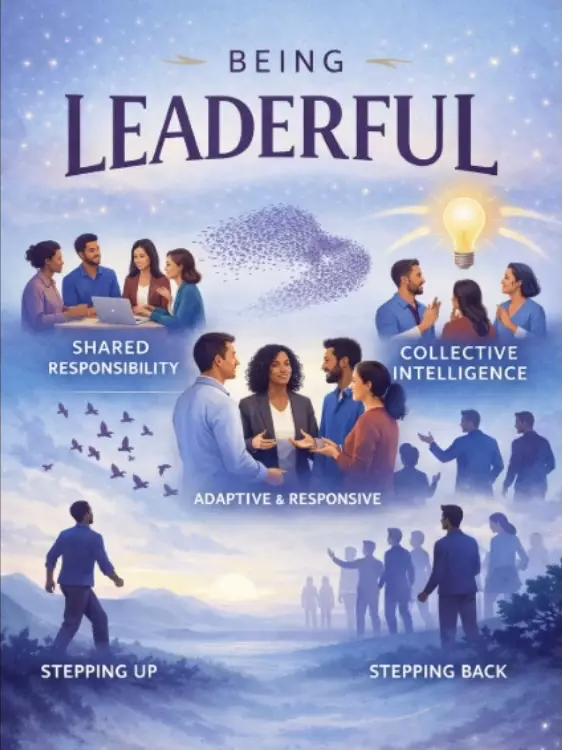
Sometimes transformation begins with something very simple.
When I first met Jack Lowe, I was working for the Association of General Contractors in Dallas, Texas, and he was serving as President. What immediately caught my attention was the way he interacted with competitor contractors. Instead of treating them as rivals, he treated them as if they held the collective wisdom of the universe. He listened deeply, valued their ideas, and approached every conversation with humility and respect.
It was my first glimpse of what I would later recognize as Being Leaderful.
That same year, Jack invited me to work with TDIndustries to help improve workflow and culture. On my first day walking into the building, I experienced another lesson I would never forget.
Jack Lowe was sitting at the receptionist desk.
Seeing my confusion, he smiled and said, “We job share on Thursday mornings so we can understand each other’s role. Sandra’s at my desk.”
In that simple moment, Jack demonstrated something profound. Leadership was not about hierarchy or titles. Leadership was about understanding, connection, and service.
My learning with Jack Lowe had just begun.
The story actually began years earlier with his father, Jack Lowe Sr. In the late 1960s, morale at TDIndustries was low. Instead of issuing directives, Jack Lowe Sr. invited small groups of employees to his home for dinner. He cooked the meals himself. Around the table, people talked openly about their work, their struggles, and their hopes for the company.
Before they left, each employee received a small booklet, Robert Greenleaf’s essay The Servant as Leader.
Those dinners sparked a cultural shift. Leadership at TDIndustries became something practiced by everyone, not just those with titles. When Jack Lowe Jr. became CEO in 1980, he carried forward and expanded that vision. Every employee participated in leadership development, and the company became known as a place where people served, supported, and learned from one another.
For sixteen consecutive years, TDIndustries was recognized by Fortune Magazine as one of the Best Places to Work in America.
But the real success was cultural.
People learned to Step Up, Step Back, and Step Together to achieve more than any individual could alone.
Watching Jack Lowe live these principles shaped my own understanding of leadership. Over the decades, I have been deeply grateful and humbled by the opportunity to work with him and share in a relationship built on WE.
His example reminds us that leadership is not about control. It is about connection, service, and the collective wisdom that emerges when people learn to lead together.